A free market with limited government intervention has long been a pillar of Republican economic orthodoxy. Today’s Republican party has deviated from its laissez-faire economic roots, embarking instead on populist economic policies across a broad swath of the economy.
Policy initiatives exemplifying this populist agenda include pharmaceutical price fixing, restrictions on investors buying single-family homes, imposition of tariffs, price controls, industrial policy, paying stay-at-home parents, controls on defense contractor executive compensation, and capping credit card interest rates. The GOP’s enthusiastic embrace of populist policies has even extended to property and casualty insurance. The administration’s interventions in insurance policy, like its other interventions, will disrupt private markets while failing to address the issues at hand.
The last time a U.S. president introduced wide-ranging price controls was 1971, when the Nixon administration imposed a nationwide 90-day wage and price freeze in an effort to tame inflation. The law of unintended consequences kicked in, and instead of falling, inflation ballooned to 12%. Price ceilings caused shortages that led to long gas station lines and empty supermarket shelves. This failed experiment should be remembered as we watch an administration desperately trying to deliver on today’s “affordability” crisis.
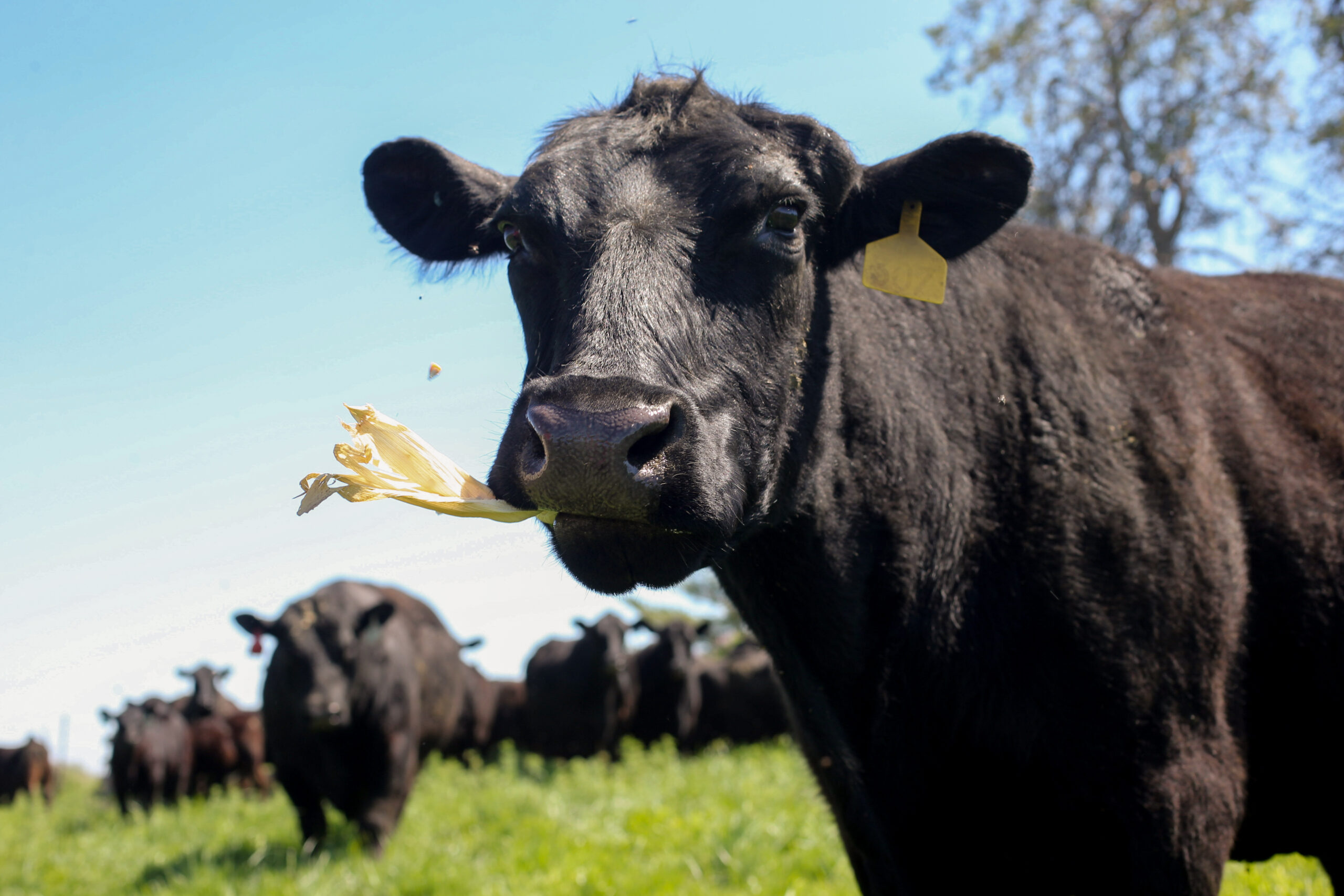
The most recent administration intrusion in insurance matters is waiving tariffs on Brazilian beef imports in an attempt to drive down rising beef costs, which have grown 13% in the past year. In the short term, beef prices may come down, but there will be blowback from lower beef prices causing the government to pay out more to ranchers from an obscure government insurance program embedded within the federal crop insurance program — the Livestock Risk Protection Program (LRP).
The LRP introduces a floor price: if the price of beef drops below the floor, ranchers receive payments from the insurance program. Like other components of the Crop Insurance Program that are heavily government-subsidized, ranchers never lose, receiving payouts regardless of what the market dictates. Subsidies for ranchers’ insurance premiums range from 35% to 55%, with an additional 10% premium subsidy available for young ranchers and for veterans who become ranchers.
Brazilian Beef Stampede
The U.S. cattle herd has shrunk in recent years due to the impact of drought, higher fertilizer and diesel costs, and rising prices for grazing land. The administration’s tariff rollback applies to 300,000 metric tons of beef, mainly from Brazil, beginning September 1. While 300,000 metric tons sounds like a substantial amount, it translates into just two pounds of beef for every American. Prior to the rollback, a 26.5% tariff applied to Brazilian products. The tariff suspension, which began on September 1, lasts three months. The president announced that imported Brazilian beef will be sold at a discounted price — 25% less than the market price — though how those discounted prices will be calculated has not been made clear.
Bad Brazilian Beef
Brazil’s beef industry was recently at the epicenter of a large bribery scandal. In 2017, an investigation was launched in Brazil to examine allegations of collusive corruption among lawmakers and meat inspectors. The investigation revealed that dozens of health inspectors and lawmakers were bribed to stay silent in the face of a massive scheme involving tainted Brazilian beef.
The “Operation Weak Meat” investigation uncovered a scheme to buy the silence of inspectors. Meatpackers were found to be selling rotten or salmonella-infected beef and changing expiration dates, and applied acids to meat to reduce the stench of decay. Companies involved in this corruption included JBS, a Brazilian company that is the world’s largest meatpacker.
When the extent of the Brazilian beef scandal was revealed, the U.S. Department of Agriculture (USDA) implemented 100% re-inspection and pathogen testing on all Brazilian meat imports. So much meat was found unfit for consumption that the U.S. instituted a two-and-a-half-year suspension of Brazilian beef purchases, ending in February 2020.
Populist Insurance Policy
The administration’s promise to sell beef at a 25% discount is reminiscent of a promise made by President Trump to implement a 50% reduction in automobile insurance premiums. During the 2024 presidential campaign, Trump promised to cut automobile insurance premiums by 50%, delivering the claim via social media: “Your Automobile Insurance is up 73% — VOTE FOR TRUMP, I’LL CUT THAT NUMBER IN HALF!” The claim had no basis in reality.
Perhaps emboldened by efforts at the federal level, some states have also been pursuing strict price controls on insurance. Illinois Governor JB Pritzker signed HB 4273 and SB 714 in August 2026, granting the state authority to review, audit, and block excessive home and auto insurance rate hikes starting July 1, 2027.
The Vanderbilt Proposal
Another federal initiative aimed at reducing insurance costs is described in a recent report from Vanderbilt University. The report alleges that insurance companies have been overcharging buyers since the 1980s. It argues for the creation of federal oversight bodies to limit profit margins by dictating the allowable elements in an insurer’s expense load, and further argues that insurers should “rebate” premiums when loss and expense ratios are deemed excessive.
Remember McCarran-Ferguson?
There are two main reasons why federal government attempts to control insurance are inappropriate. First, the McCarran-Ferguson Act, passed in 1945, clearly establishes that insurance is regulated by states, not the federal government. Second, federal price controls — such as price ceilings — do not work. They suppress or distort market signals, crowd out the private market, and lead to persistent shortages and inferior quality.
Looking at proposals to manipulate federal insurance programs and trade policy to achieve populist goals, including the tariff suspension on Brazilian beef, a pattern emerges of vain attempts to stage-manage a complex economy. Turning coarse and fine economic tuning knobs is no more effective than dancing around a campfire to summon rain. The correct approach is to refrain from attempting to control something as complex and interconnected as a modern economy, and instead return to what classical liberal economic theory holds regarding free markets: get out of the way.