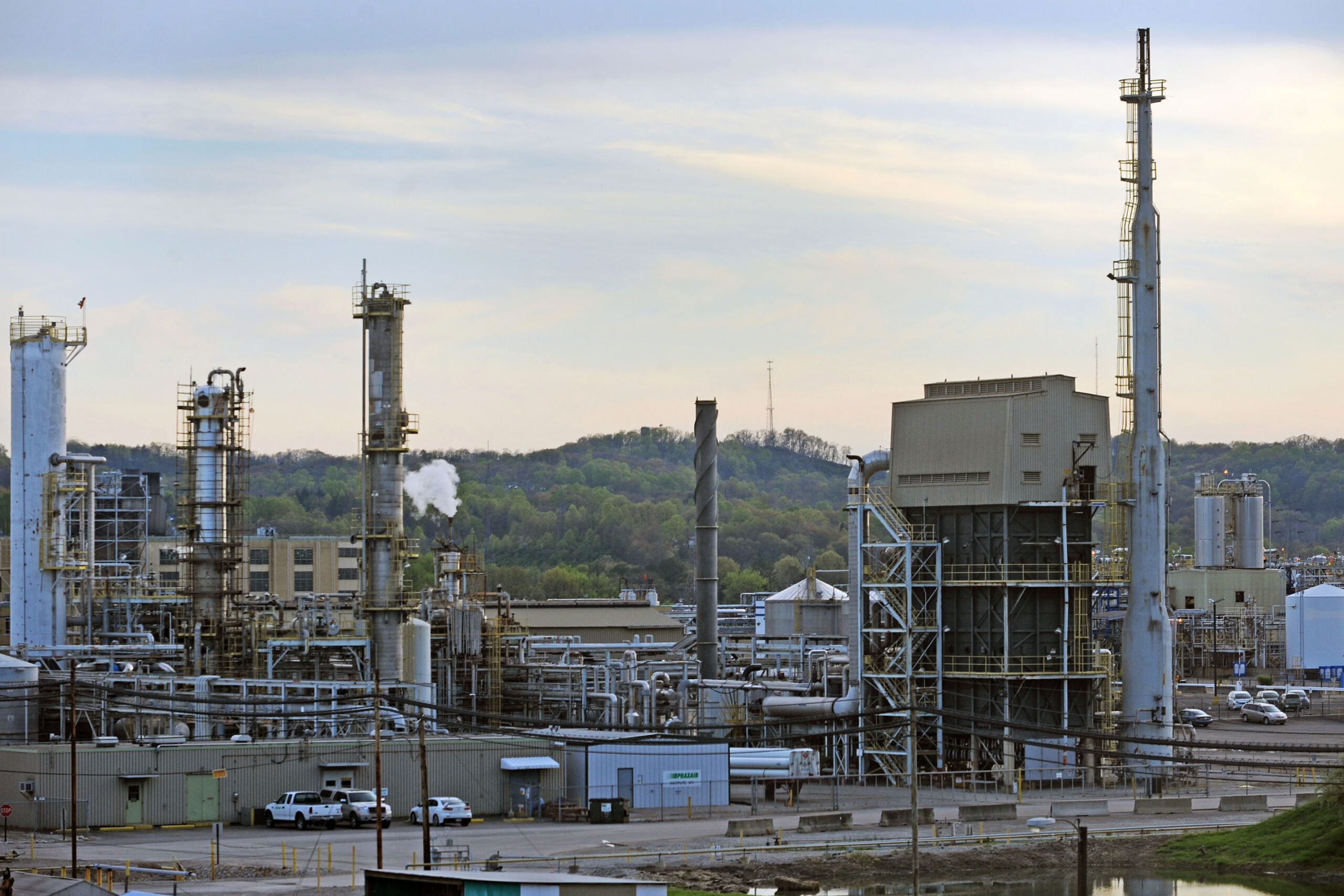
When two workers died at the Ames Goldsmith plant in Kanawha County last month, federal investigators were on the ground in West Virginia within days. That response may soon become impossible.
A Small Agency With a Specific Job
The Chemical Safety and Hazard Investigation Board operates on a budget of roughly $14 million and employs fewer than 50 people. It was established through amendments to the Clean Air Act in 1990, modeled deliberately after the National Transportation Safety Board - the agency that investigates airplane and train crashes. The logic was the same: when a plane goes down, you want someone asking why it went down, not just whether the airline broke a rule. Congress created the CSB precisely because existing federal agencies were not adequately investigating major industrial chemical disasters. That frustration was the founding condition.
The Trump administration’s position is that the CSB duplicates work already handled by the Environmental Protection Agency and the Occupational Safety and Health Administration, and that eliminating it would reduce the size of the federal government. The argument sounds reasonable until you examine what those other agencies actually do. OSHA and the EPA primarily determine whether companies violated existing regulations - enforcement functions, not diagnostic ones. Jordan Barab, a former deputy assistant secretary at OSHA, draws a sharp distinction: the CSB conducts broader root-cause investigations into why disasters happened in the first place, probing factors that may fall entirely outside current regulatory frameworks.
That difference matters enormously for anyone living near an industrial facility - and for the insurers, municipalities, and property owners downstream of one. Worker fatigue, deferred maintenance, management turnover, and safety culture breakdowns inside a facility are not the kinds of violations that show up in an EPA citation. They are the kinds of conditions the CSB is specifically structured to surface. After a toxic chemical release at DuPont’s Belle plant in West Virginia in 2010 killed a worker, CSB investigators concluded the leak stemmed from inadequate planning, poor communication between plant operators, and a pattern of deferred maintenance. None of those findings were enforcement actions. All of them identified conditions that could kill someone again.
Over its history, the board has issued more than 1,000 recommendations. Many were subsequently adopted by companies, trade associations, and state regulators. Barab has noted that a significant portion of how the chemical industry has updated its safety practices traces directly to CSB findings - making the board’s output consequential well beyond the specific incidents it investigated.
West Virginia’s Particular Exposure
The Kanawha Valley’s industrial corridor concentrates a large number of chemical facilities into a stretch of land where exposure risks are not evenly distributed. The CSB has opened investigations into eight chemical incidents in West Virginia since 2008 alone.
The list is specific and damaging. In 2008, an explosion at the Bayer Crop Science plant in Institute killed two workers. In 2010, the DuPont Belle plant release killed one more. In January 2014, a spill at Freedom Industries contaminated the drinking water supply for hundreds of thousands of people across the region - a disaster whose effects extended far beyond plant gates and into homes, businesses, and municipal infrastructure that had nothing to do with the chemical industry at all.
That 2014 spill illustrates why framing chemical disasters purely as occupational hazards misses the point. When a storage tank fails upstream of a water intake, the consequences land on residential homeowners, renters, schools, and hospitals. The costs of those events - emergency response, property remediation, alternative water sourcing, long-term health monitoring - don’t stay inside the plant. They spread.
Maya Nye, federal policy director for the environmental health organization Coming Clean, has observed that low-income communities and communities of color consistently face disproportionate exposure to these risks. Workers, she argues, are typically hurt first and most severely. But the ripple effects reach outward. A contaminated water system affects every policyholder whose property depends on it.
Dismantling the CSB would not eliminate chemical incidents. It would eliminate the federal mechanism for systematically understanding what caused them, and for translating those findings into industry-wide changes.
What Disappears Without Root-Cause Investigation
The CSB’s investigative model assumes that a disaster contains information - about what failed, in what sequence, under what management conditions - that can prevent the next one.
That assumption is not theoretical. The board publicly criticized the Trump administration’s earlier efforts to roll back chemical safety regulations known as Risk Management Program rules, warning that those rollbacks would represent “a significant step backwards” in preventing catastrophic chemical accidents. The RMP rules govern how facilities near populated areas plan for and communicate about chemical hazards. Weakening them while simultaneously proposing to eliminate the only agency that performs independent root-cause analysis on chemical disasters compounds the exposure.
From a property and casualty standpoint, the calculus is direct. Chemical disasters generate insurance claims across multiple lines - homeowners policies when contamination reaches residential areas, commercial property policies when neighboring businesses are forced to close, health-related claims when toxic releases send workers and nearby residents to hospitals. The 2014 Freedom Industries spill affected hundreds of thousands of people’s water supply. Events at that scale produce claims that persist for years. The CSB’s work, by identifying contributing factors and pushing for systemic changes, functions as a long-cycle loss-prevention mechanism - not for any single insurer, but for the broader risk environment.
Without a dedicated investigative body, the responsibility for understanding industrial chemical disasters fragments. OSHA will continue citing companies for regulatory violations. The EPA will continue its enforcement functions. But neither agency is structured to ask the upstream question: what conditions inside this facility, over months or years, made this outcome likely? That question is where prevention lives.
The CSB’s budget of approximately $14 million is, by federal standards, negligible. For comparison, the National Transportation Safety Board - the agency it was modeled after - operates on a budget more than ten times larger. The argument that eliminating a $14 million agency meaningfully shrinks the federal government runs against basic arithmetic. What it does shrink is the federal capacity to prevent the next Kanawha County disaster from becoming the one after that.
As of publication, the CSB’s investigation into the Ames Goldsmith plant deaths in Kanawha County remains open. Whether the agency will still exist to complete it is an open question.
This article is for general informational purposes only and does not constitute legal, financial, or insurance advice. Coverage terms, regulatory frameworks, and agency budgets are subject to change. Consult qualified professionals and official government sources before making decisions based on this material.